
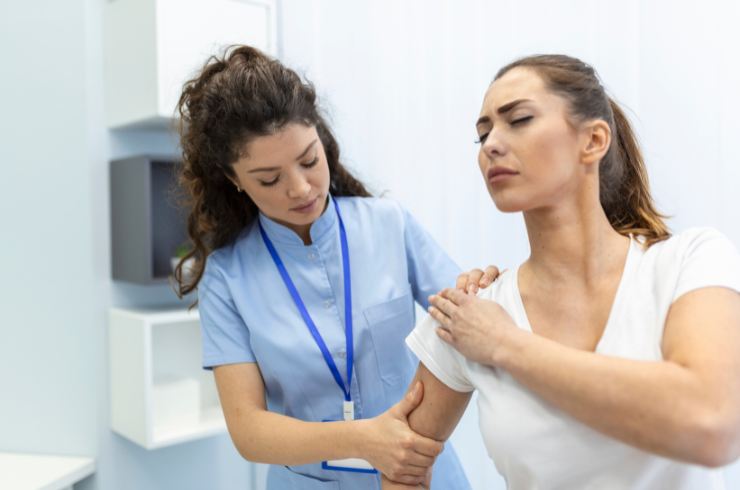
Shoulder & Knee Stabilisation Surgery is performed to address persistent joint instability caused by damaged ligaments, recurrent dislocations, soft-tissue injuries, or structural problems within the joint. The aim is to restore stability, improve joint function, and reduce the likelihood of repeated episodes of instability.
Depending on the affected joint, the underlying cause, and the extent of damage, stabilisation may involve repairing or reconstructing damaged tissues, tightening loose structures, or addressing associated bone abnormalities. The appropriate procedure is determined after a detailed clinical assessment and imaging evaluation.
Not every case of shoulder or knee instability requires surgery. Some patients may improve with physiotherapy, activity modification, medication, and rehabilitation. Surgery may be considered when instability continues despite appropriate non-surgical treatment or when there is significant structural damage.
Shoulder or knee stabilisation surgery may be considered in cases involving:
A thorough evaluation helps determine whether surgical stabilisation is appropriate for the individual patient.
The shoulder is designed to allow a wide range of movement, but this mobility can also make it susceptible to instability. Recurrent shoulder dislocations or subluxations may occur when the supporting ligaments, labrum, muscles, or other stabilising structures are damaged.
Shoulder stabilisation surgery aims to repair or restore these structures so that the shoulder can function with greater stability. Arthroscopic techniques may be used in appropriate cases, while certain patients may require additional procedures depending on bone loss or other structural changes.
Knee instability can develop following ligament injuries, patellar dislocation, or other trauma affecting the structures responsible for maintaining knee alignment and stability.
Depending on the cause, knee stabilisation surgery may involve ligament repair or reconstruction, procedures addressing patellar instability, or other techniques designed to restore appropriate joint mechanics.
The treatment approach depends on the specific ligament or structure involved, the severity of the injury, activity level, and previous treatment history.
The surgical approach varies according to the source of instability and the condition of the joint.
Before surgery, the patient undergoes a detailed examination and may require imaging such as X-rays or MRI scans. In selected cases, additional imaging may be required to assess bone loss or other structural abnormalities.
During surgery, damaged or insufficient stabilising structures may be repaired or reconstructed. Arthroscopic techniques can allow the surgeon to assess and treat certain problems through small incisions. Where necessary, additional procedures may be performed to address bone or soft-tissue abnormalities.
Recovery after Shoulder & Knee Stabilisation Surgery varies depending on the procedure performed, the joint treated, the severity of the underlying problem, and the patient’s overall health.
The early recovery period generally focuses on protecting the repaired or reconstructed structures while gradually restoring movement. Physiotherapy is then introduced or progressed according to the surgical procedure and individual recovery plan.
Rehabilitation may include:
Following the recommended rehabilitation programme is an important part of achieving a stable and functional joint.
There is no single recovery timeline for all patients undergoing Shoulder & Knee Stabilisation Surgery. Recovery depends on the type of stabilisation procedure, the extent of tissue damage, whether reconstruction was required, and the patient’s response to rehabilitation.
Some everyday activities may be resumed relatively early, while higher-impact activities and sports generally require a more gradual progression. Your surgeon and physiotherapist can provide a personalised timeline based on the procedure performed and your progress during follow-up.
A typical treatment journey may include:
1. Clinical Evaluation
Your symptoms, previous injuries, instability episodes, activity level, and medical history are assessed.
2. Imaging & Diagnosis
Appropriate imaging is used to understand the condition of the joint and identify structural damage.
3. Treatment Planning
The most suitable treatment is discussed based on the cause and severity of instability.
4. Surgical Stabilisation
If surgery is required, the damaged or unstable structures are repaired, reconstructed, or otherwise addressed using the appropriate technique.
5. Rehabilitation
A structured rehabilitation programme helps restore movement, strength, coordination, and joint function.
6. Follow-Up
Regular follow-up allows recovery to be assessed and activity progression to be adjusted as needed.
Instability affects mobility and daily performance. Dr. Mudit Nemani specialises in stabilisation surgeries for shoulders and knees to restore confidence and prevent repeated injuries.
Recurrent shoulder dislocation
Shoulder instability
Patellar (kneecap) instability
Ligament laxity
Post-injury recurrent giving-way
Arthroscopic stabilisation
Ligament tightening or reconstruction
Bone block procedures (if needed)
Soft-tissue balancing
Improved joint stability
Prevents repeated dislocations
Enhanced strength and function
Safe return to sports
The decision to undergo shoulder & knee stabilisation surgery depends on several factors, including the cause of instability, frequency of symptoms, previous injuries, imaging findings, activity requirements, and response to non-surgical treatment.
A specialist assessment can help determine whether continued conservative treatment or surgical stabilisation is more appropriate for your condition.
Shoulder & Knee Stabilisation Surgery refers to procedures performed to address instability of the shoulder or knee by repairing, reconstructing, or otherwise restoring damaged stabilising structures.
No. Depending on the cause and severity of instability, some patients may improve with physiotherapy, strengthening, activity modification, and other non-surgical treatments. Surgery is considered when clinically appropriate.
Recurrence is possible after stabilisation surgery. The risk depends on factors such as the underlying injury, structural abnormalities, type of procedure, activity level, and adherence to rehabilitation.
Many patients can work towards returning to sports following appropriate treatment and rehabilitation. The timing and level of return depend on the procedure performed and individual recovery.
A specialist evaluation is required to determine the cause of instability and whether surgery is appropriate. Your assessment may include a physical examination and imaging studies.
Persistent instability can interfere with daily activities, physical performance, and confidence in the affected joint. Recurrent episodes may also cause further injury in some patients. Early assessment can help determine the appropriate treatment approach.
Persistent shoulder or knee instability should not be ignored, particularly when the joint repeatedly dislocates, gives way, or becomes difficult to use during daily activities or sports.
If you are experiencing recurrent instability, a specialist evaluation can help identify the underlying cause and determine the most appropriate treatment. Dr. Mudit Nemani provides personalised assessment and treatment planning for patients requiring evaluation for shoulder and knee instability.
 +91-8961265236
 nemani.mudit@gmail.com
 Bidhannagar, Kolkata, West Bengal