
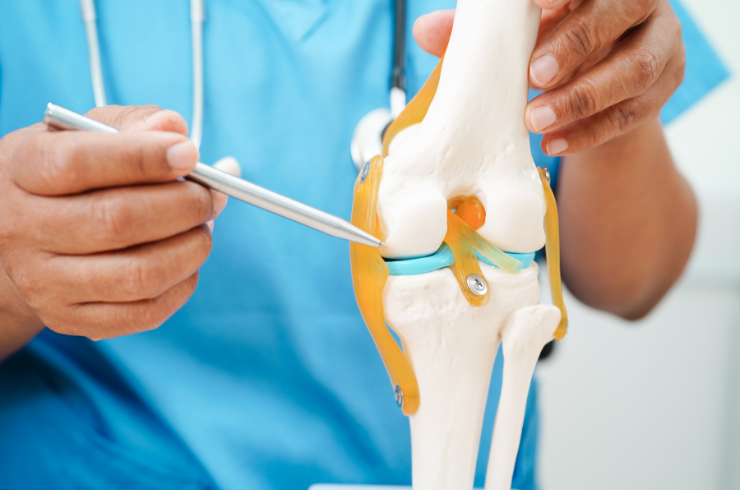
Joint replacement surgery is a procedure in which a damaged or severely diseased joint is replaced with an artificial implant. It is generally considered when damage to the joint causes persistent pain, stiffness, reduced mobility, and difficulty performing everyday activities.
Depending on the joint involved and the extent of damage, replacement may involve the entire joint or only the damaged portion. Knee, hip, and shoulder replacement procedures are among the commonly performed forms of joint replacement surgery.
The goal is to reduce pain, improve joint function, and help patients return to a more active and comfortable lifestyle.
Joint replacement is not usually the first treatment option for joint pain. Depending on the condition, doctors may initially recommend medication, physiotherapy, lifestyle modifications, weight management, or other non-surgical treatments.
Joint replacement surgery may be considered when:
A detailed assessment helps determine whether replacement surgery is appropriate for the patient.
Before surgery, the affected joint is carefully evaluated through a physical examination and appropriate imaging. X-rays and, when required, other investigations help assess the extent of joint damage and guide surgical planning.
During joint replacement surgery, the damaged portions of the joint are removed and replaced with specially designed artificial components. The implant is positioned to restore appropriate alignment and joint movement.
The exact surgical technique depends on the joint being treated, the extent of damage, the patient’s anatomy, and other individual factors.
Not every patient with knee arthritis requires a total knee replacement.
Total Knee Replacement (TKR) involves replacing the damaged surfaces of the knee joint when disease affects multiple compartments or the joint has extensive damage.
Partial Knee Replacement may be appropriate for selected patients when damage is limited to a specific compartment of the knee and the remaining structures are sufficiently healthy.
The choice between partial and total replacement depends on factors such as the location and severity of arthritis, ligament condition, knee alignment, age, activity level, and imaging findings.
Knee replacement surgery is commonly considered for patients with advanced knee arthritis and significant pain or functional limitations.
The procedure aims to replace damaged joint surfaces and restore a more functional alignment of the knee. Following surgery, rehabilitation focuses on gradually improving movement, strength, walking ability, and confidence in the operated leg.
Hip replacement surgery may be recommended when damage to the hip joint causes persistent pain and significant restriction of movement.
During the procedure, damaged portions of the hip are replaced with artificial components designed to restore joint function. Rehabilitation after surgery focuses on safe movement, progressive strengthening, and a gradual return to daily activities.
Shoulder replacement surgery may be considered when severe arthritis or other joint damage causes persistent pain and substantial loss of shoulder function.
Depending on the condition of the shoulder, different types of replacement procedures may be considered. The appropriate option is determined after evaluating the joint, surrounding structures, and the patient’s functional requirements.
Preparing appropriately for joint replacement surgery can help patients approach the procedure with a clearer understanding of what to expect.
Preparation may include:
Your surgeon will provide specific instructions based on your procedure and individual medical needs.
Recovery after joint replacement surgery takes place progressively. The initial phase generally focuses on pain management, safe movement, and protecting the operated joint while healing begins.
Physiotherapy plays an important role in restoring:
The pace of recovery varies between individuals and depends on the joint replaced, surgical procedure, general health, physical condition, and adherence to rehabilitation.
Modern joint replacement implants are designed for long-term use, but their lifespan can vary from one patient to another. Factors such as activity level, body weight, implant type, surgical technique, and overall joint health can influence how long an implant remains functional.
Regular follow-up and maintaining a healthy level of activity can be important parts of long-term joint care.
Most patients gradually return to everyday activities after completing the appropriate stages of recovery. Low-impact activities such as walking, swimming, cycling, and other suitable exercises may be incorporated depending on the joint replaced and individual recovery.
High-impact activities may not be appropriate for every patient. Your surgeon or physiotherapist can advise you on activities that are suitable at different stages of recovery.
Like any major surgical procedure, joint replacement surgery carries potential risks. These can vary depending on the type of replacement and the patient’s overall health.
Possible complications may include infection, blood clots, stiffness, implant-related problems, persistent pain, or the need for further surgery. A detailed pre-operative assessment and appropriate post-operative care help reduce potential risks.
Your surgeon can discuss the potential benefits and risks relevant to your specific condition before treatment.
Your symptoms, medical history, mobility, and joint condition are assessed.
Imaging helps determine the extent of joint damage and whether replacement may be appropriate.
The surgical approach and implant options are discussed based on your individual requirements.
The damaged joint surfaces are replaced with appropriate artificial components.
Movement, walking, pain management, and basic functional activities are gradually introduced.
Strength, mobility, balance, and everyday function continue to improve through structured rehabilitation.
Patients receive guidance on maintaining joint function and returning to appropriate activities.
Severe joint pain does not automatically mean that you need a replacement. The decision depends on the severity of joint damage, symptoms, functional limitations, response to non-surgical treatment, and overall health.
If persistent pain or stiffness is significantly affecting your daily life, a specialist evaluation can help determine whether continued conservative treatment or joint replacement surgery may be appropriate.
Advanced Knee, Hip & Shoulder Replacement Surgery
Joint Replacement is recommended when pain, stiffness, or arthritis severely affects mobility. Dr. Mudit Nemani performs knee, hip, and shoulder replacements using advanced implants and minimally invasive techniques.
Severe osteoarthritis
Rheumatoid arthritis
Post-traumatic arthritis
Joint deformities
End-stage degenerative changes
Total Knee Replacement (TKR)
Partial Knee Replacement
Hip Replacement
Shoulder Replacement
Long-lasting pain relief
Improved joint alignment
Better stability and movement
Return to active lifestyle
Higher quality of life
Precision-based surgery
High-quality implants
Minimally invasive technique
Doctor-supervised rehabilitation plan
Patients receive personalised rehabilitation focused on building strength, mobility, and balanced movement patterns.
Joint replacement surgery involves removing damaged portions of a joint and replacing them with artificial components to reduce pain and improve joint function.
It may be considered when severe joint damage causes persistent pain, stiffness, and difficulty with everyday activities, particularly when non-surgical treatments no longer provide sufficient relief.
Common joint replacement procedures include knee, hip, and shoulder replacement. The appropriate procedure depends on the affected joint and the extent of damage.
Age alone does not determine whether someone is suitable for joint replacement. The decision depends on the severity of joint damage, symptoms, functional limitations, overall health, and other individual factors.
Recovery varies depending on the joint replaced, surgical procedure, general health, and rehabilitation progress. Your surgeon can provide a more personalised recovery timeline.
Rehabilitation is an important part of recovery for many patients. Physiotherapy can help restore movement, strength, balance, and functional ability following surgery.
Many patients are able to return to a range of everyday and recreational activities after recovery. The appropriate level of activity depends on the joint replaced, individual recovery, and advice from the treating team.
Persistent joint pain, stiffness, or reduced mobility can significantly affect your independence and quality of life. If conservative treatments are no longer providing adequate relief, a specialist evaluation can help determine the next step.
Dr. Mudit Nemani provides personalised evaluation and treatment planning for patients considering knee, hip, or shoulder replacement surgery.
 +91-8961265236
 nemani.mudit@gmail.com
 Bidhannagar, Kolkata, West Bengal